Luxury Italian Bar Cabinets: The New Living Room Statement
Why the Luxury Italian Bar Cabinet Became the Living Room's Boldest Statement
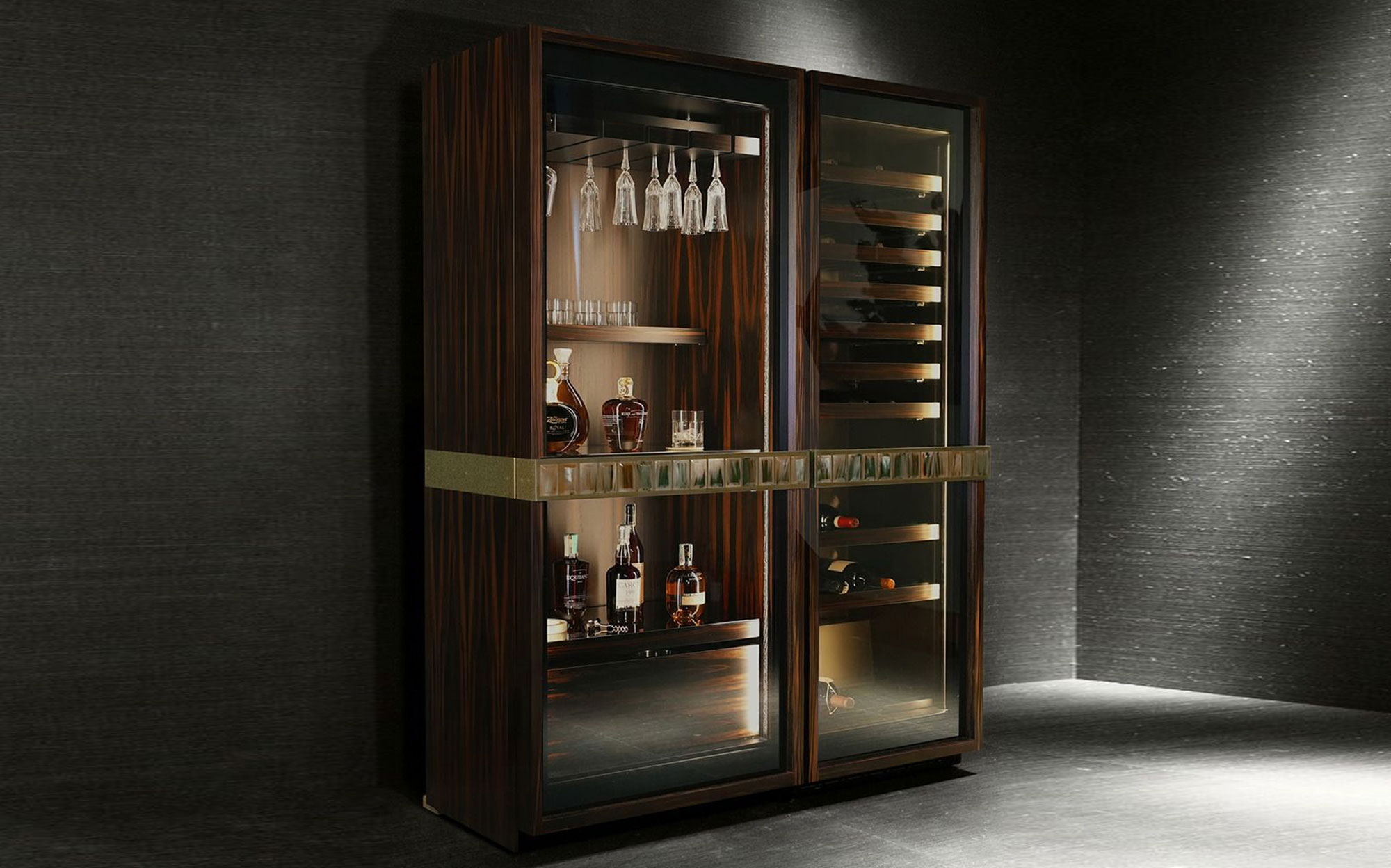
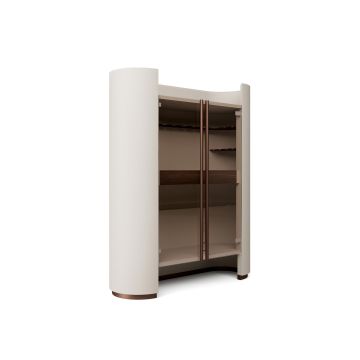
For years the bar cabinet was a quiet piece of furniture — a discreet unit tucked into a corner, opened only when guests arrived. That has changed. In the most considered interiors, the luxury Italian bar cabinet now stands where the eye lands first: a sculptural object that anchors the room before anyone pours a drink.
The shift says as much about how we live as how we furnish. Entertaining has moved back into the home, and with it a renewed appetite for the ritual of drink service — the weight of a good decanter, the click of a lacquered door, the reveal of a mirrored, softly lit interior. Italian manufacturers, with their instinct for turning function into ceremony, have answered with pieces designed to be seen as much as used.
From Concealed Unit to Sculptural Centrepiece
What separates a true bar cabinet from ordinary storage is intent. These are architectural objects, conceived to hold a focal position rather than fill a wall. Interiors that once treated the bar as an afterthought now build the room around it, letting a single cabinet set the tone of an entire living space.
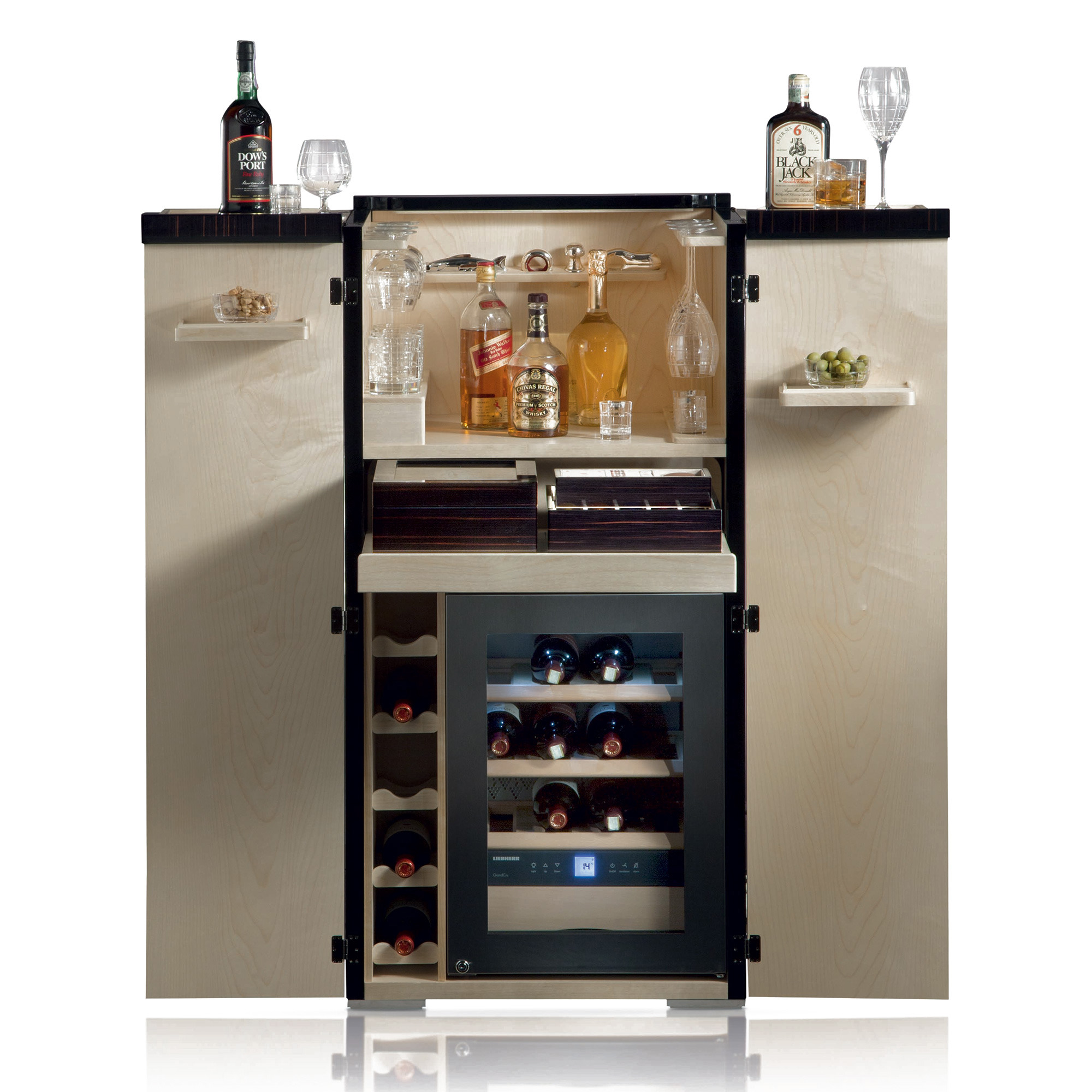
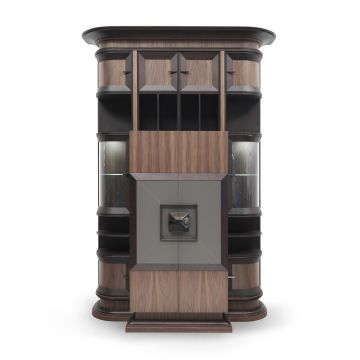
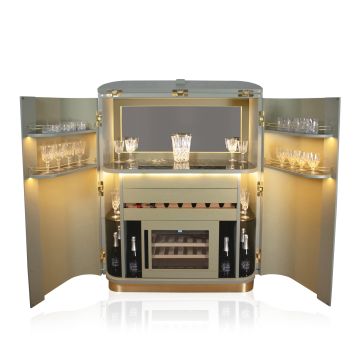
The range of expression is wide. At one end sits the collector's piece: Agresti's Bacco e Tabacco bar armoire, offered in both ebony and briar-root finishes, continues a lineage of Florentine cabinetmaking where the interior — fitted, mirrored, secure — is as meticulous as the façade. At its most ambitious, the same house's Peninsula bar armoire treats drink service as an event, a commanding presence for interiors that spare nothing.
Materials That Carry the Drama
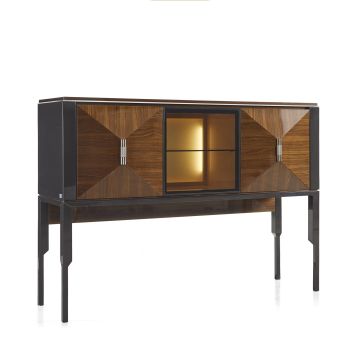
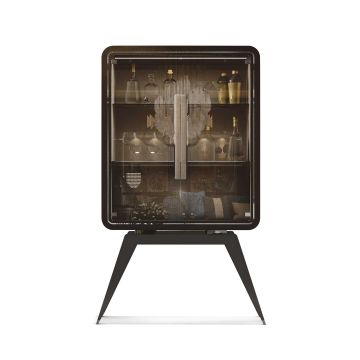
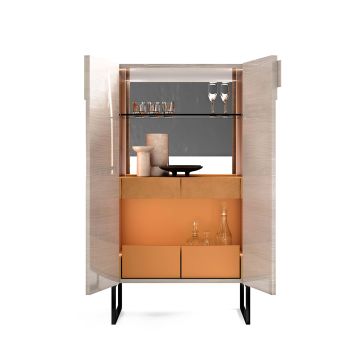
Luxury Italian bar cabinets earn their presence through material contrast. Glass and metal read as light and precise; wood and marble read as opulent and grounded. The most compelling designs play these registers against one another.
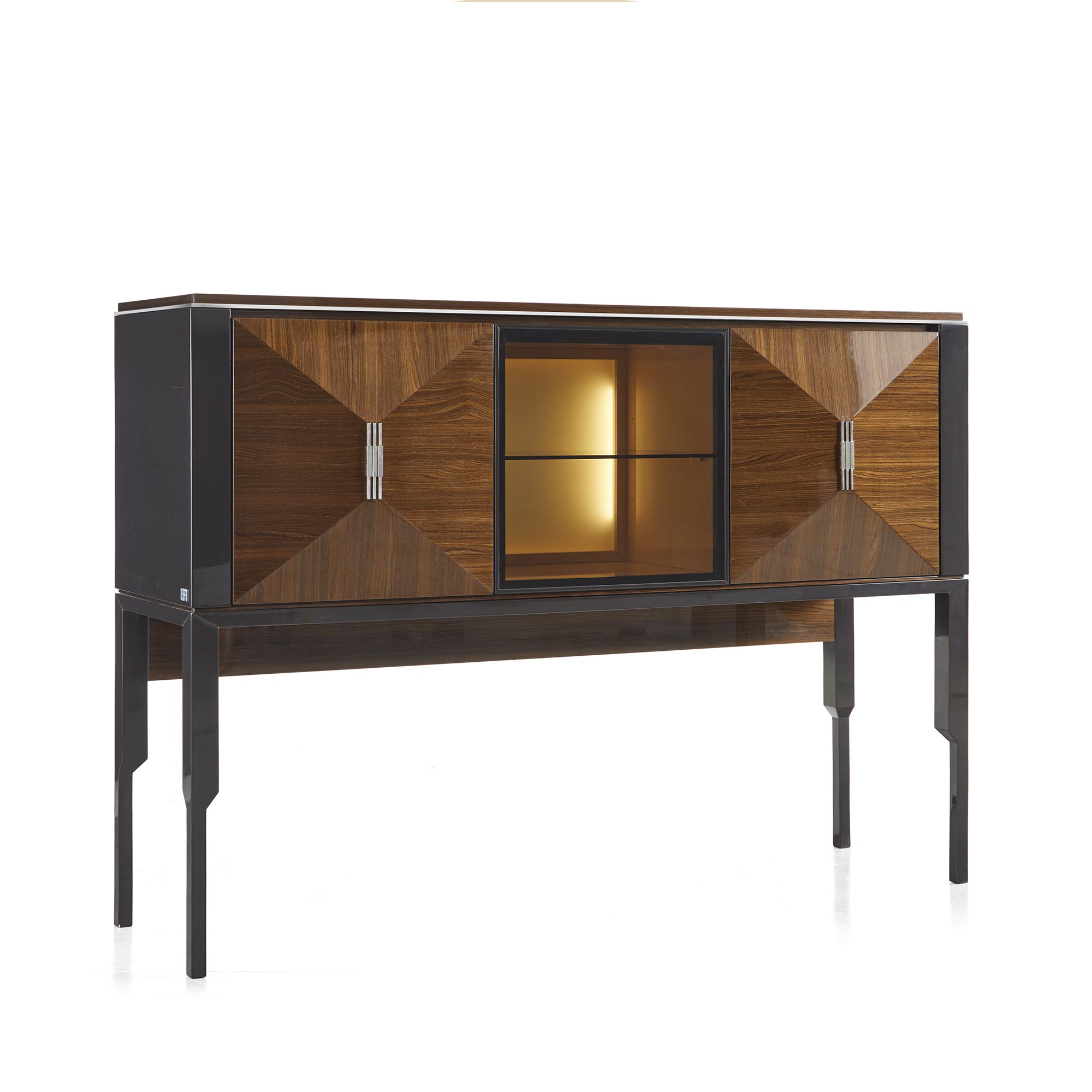
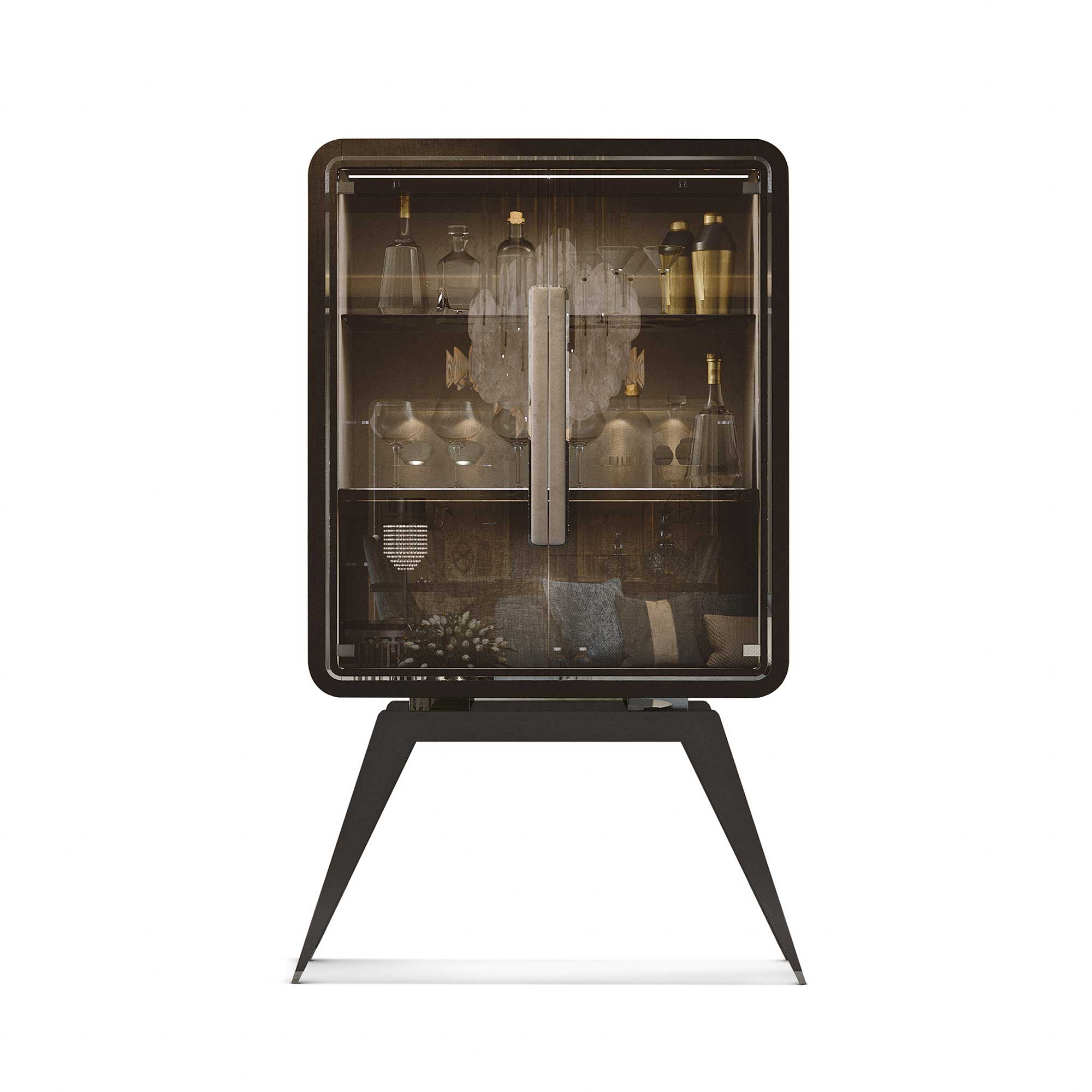
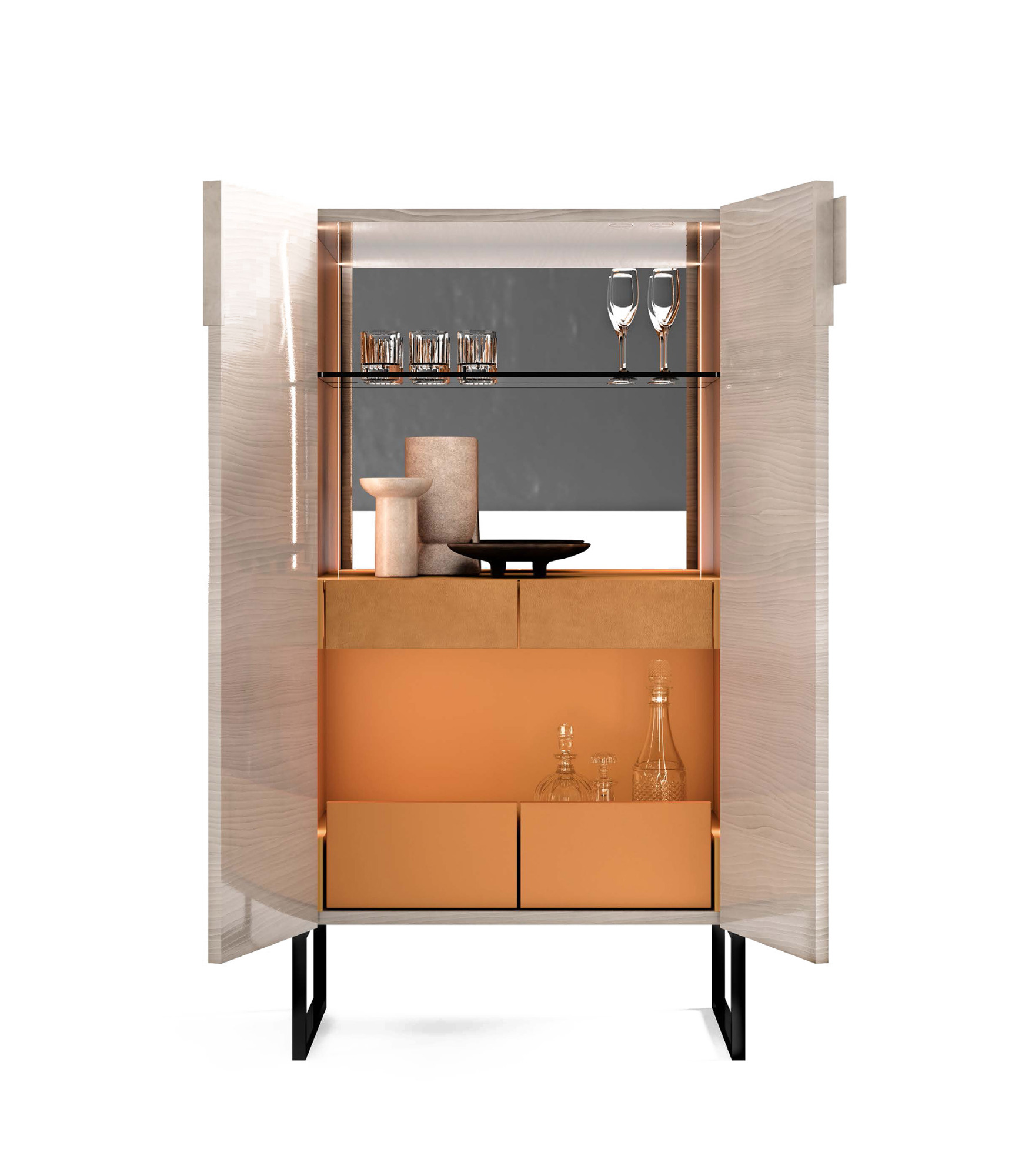
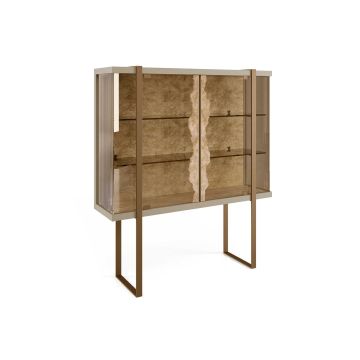
Franco Bianchini's Crystal bar unit leans into transparency and reflection, so glassware becomes part of the composition. Redeco's Hanami cocktail cabinet brings a graphic, contemporary confidence. For something more integrated, Bizzotto Italia's Ikat cabinet and Sidney sideboard fold bar function into pieces that hold their own in a modern living room, while Malerba's Bar Unit with Lights uses integrated illumination to turn the open cabinet into a small stage.
The Wine Question
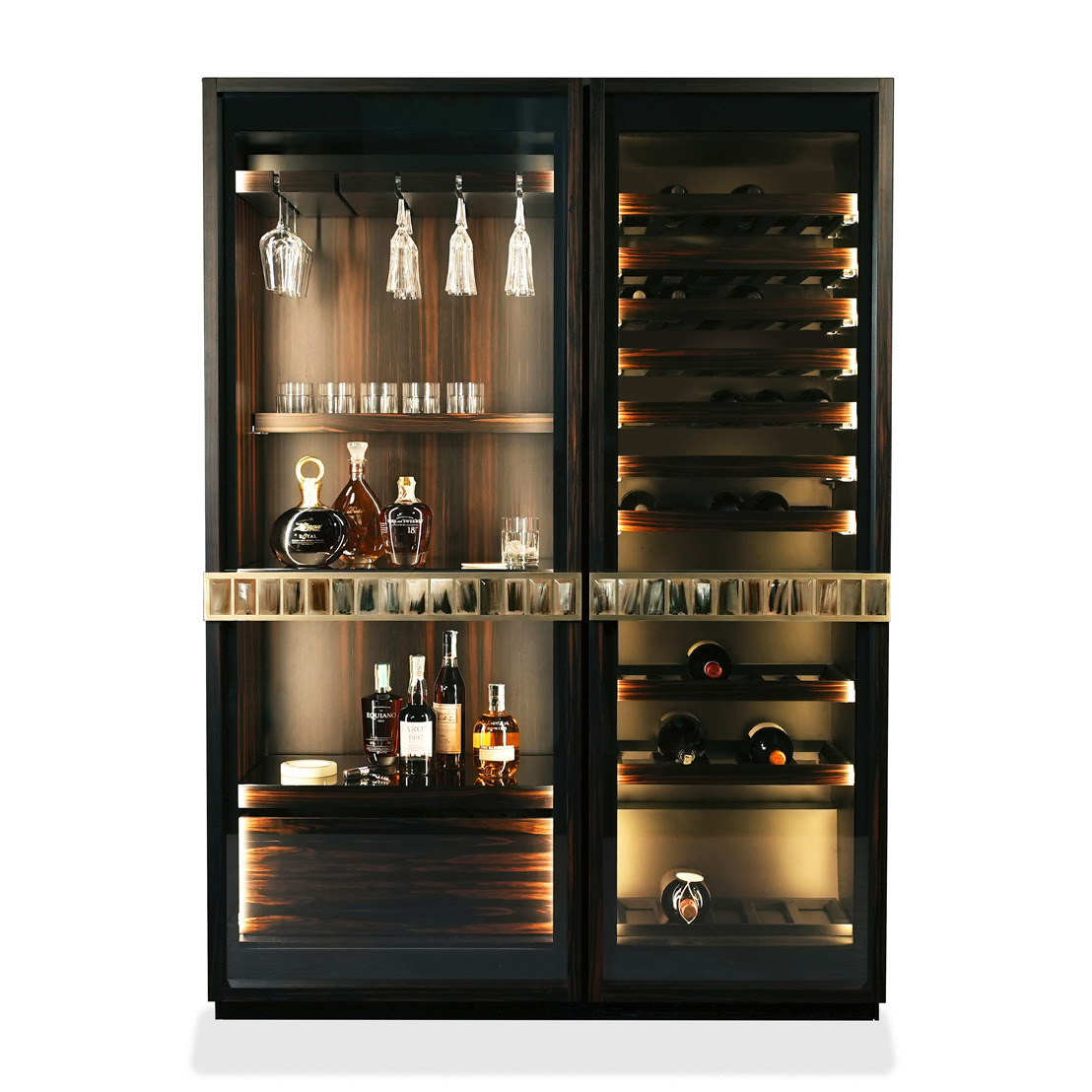
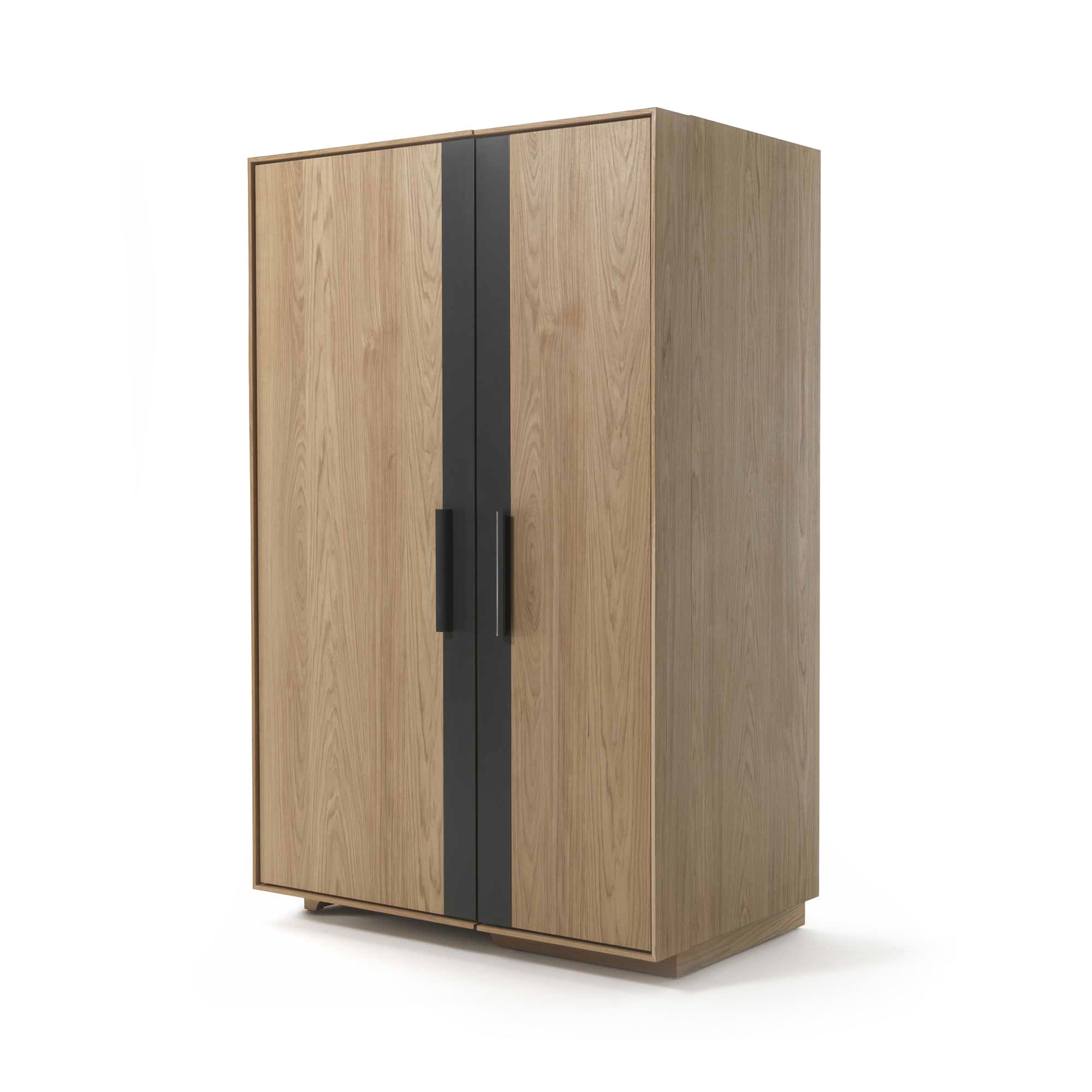
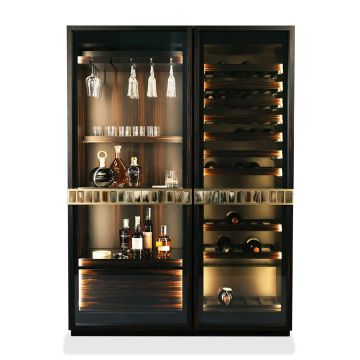
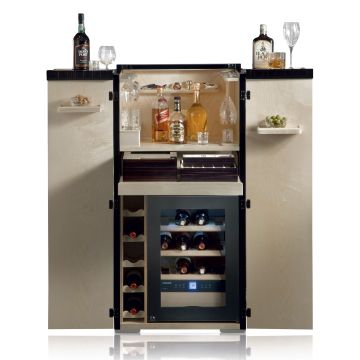
For collectors, storage becomes its own statement. Arcahorn's Manhattan wine cellar treats the bottle collection as something to display and protect, finished with the horn and leather detailing that defines the house. Riva1920's Wine Jumbo storage cabinet answers the same brief through solid wood and honest construction — a quieter luxury, rooted in material rather than ornament. And where space allows an even bolder gesture, Annibale Colombo's New Quadro modular bookcase integrates a bar cabinet directly into a wall system, dissolving the line between library, display, and bar.
Choosing a Luxury Italian Bar Cabinet
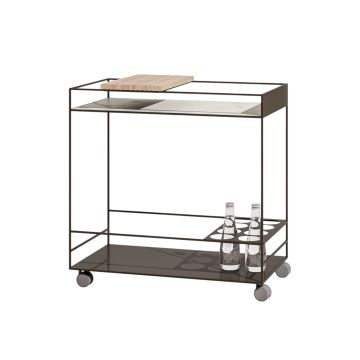
The right luxury Italian bar cabinet depends less on price than on the register of the room. A minimal, glass-and-metal design amplifies a contemporary space without crowding it; a wood-and-marble armoire gives a classic interior a clear anchor. Across the collection the styles run from Art Deco and classic to contemporary and minimal — the same breadth that has always defined Italian design, held together by one conviction: that even the most functional object deserves to be beautiful.
EXPLORE 101DOMUS
NEWSROOM
BRAND RELATED ARTICLES